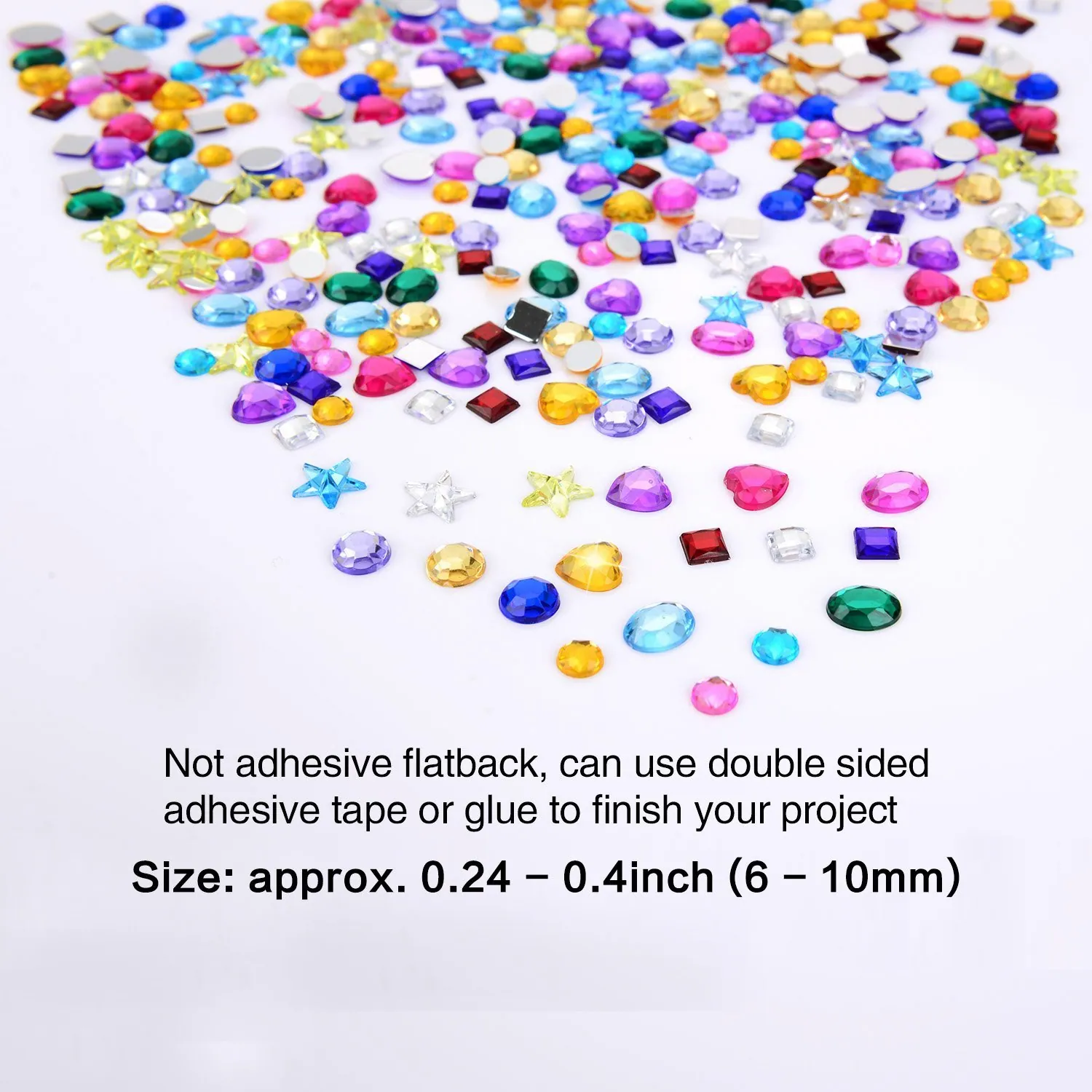
Craft supplies live inside real rules, written by an American agency, with numbers attached. Very little of that reaches the front of a bag. This guide reads the rules at the source and translates them into what you should look for before a pack goes near a table of children.
This is general information about how these rules work, taken from the agencies that publish them. It is not advice about a particular pack, a particular child or a particular classroom.
Why a craft label says so little
A pack of beads has room for a count, a size, a material and a warning line. Everything else is on a website or nowhere. That is not laziness on anyone's part, it is the size of the label.
The result is that shoppers read warning lines as marketing rather than as law. They are law. The wording, the age and even the position of the line are set out in the Code of Federal Regulations, and a pack that carries the line is telling you something specific about what is inside it.
Two rules do most of the work in our trade: the small parts ban and the lead limit. A third, ASTM D-4236, covers anything sold as an art material. All three come from the Consumer Product Safety Commission, and all three are readable in an afternoon.
The small parts cylinder
The small parts rule is the one people misquote most, usually as a size in millimetres. It is not a size. It is a physical test with a cylinder, and the definition says so plainly.
“A small part is any object that fits, without compressing and in any orientation, entirely into the small parts cylinder”
The cylinder approximates the fully expanded throat of a child under three years old. Anything that drops into it, in any orientation and without being squashed, is a small part. That covers a whole item, a component of one, and any piece that breaks off during the use and abuse testing the rule describes.
For a craft cupboard this is a clarifying idea. It does not matter whether a bead feels big in an adult hand. It matters whether it fits the cylinder, and a 16 mm bead does.
The ban applies to children's products intended for children under three. Above that age the rule turns into a labelling requirement instead: certain products that are or contain small parts, balls, marbles or balloons must carry a choking hazard warning telling buyers not to buy them for children under a stated age.
The list of things the ban leaves out
The regulation carries a list of exclusions, and the list is more interesting than it sounds. Balloons are on it. So are books and other articles made of paper, writing materials such as crayons and pencils, modelling clay, fingerpaints and watercolours, and grooming items including barrettes.
Exclusion from the small parts ban is not the same as being safe for a toddler. Balloons are the clearest case: they are outside this particular ban and they remain one of the hazards the Commission warns about most often. Its holiday guidance treats them separately for that reason.
“Keep balls and toys with small parts away from children younger than three and keep deflated balloons away from children younger than eight”
Read those two ages together. Small parts are a question below three. Deflated balloons stay a question until eight. A craft box that holds both needs two different answers.
There is one more exclusion worth knowing about because it touches half our sewing shelf. Components made of paper, fabric, yarn, fuzz, elastic or string that come loose during use and abuse testing are not counted as small parts. A frayed thread is not a choking hazard in the regulatory sense.
The lead limit, in one number
Lead in children's products has a single headline number, and it is worth memorising because it settles arguments.
“children's products that contain more than 100 ppm lead in an accessible component to be a banned hazardous substance”
One hundred parts per million, in any accessible component, in a children's product. That is Section 101 of the Consumer Product Safety Improvement Act. Paint and surface coatings have their own, tighter figure under a separate rule: ninety parts per million.
Certain untreated and unadulterated materials are exempt from testing, and unfinished engineered wood is on that list. The exemption is from testing, not from the limit. If the finished item reaches a buyer over the limit, the exemption does not help anyone.
In practice this is why unfinished wood is so common in craft ranges. Raw birch with no coating has nothing to carry lead, which makes it the easy material to work with and the honest one to sell.
ASTM D-4236 and what conformance means
Anything sold as an art material falls under the Labeling of Hazardous Art Materials Act, and that Act is where the phrase you have seen on a paint tube comes from.
“Art materials must undergo a toxicological assessment at least every 5 years to determine whether they pose a chronic hazard”
The assessment happens on a cycle, whether or not a hazard exists, and the result is the conformance line: "Conforms to ASTM D-4236", or wording close to it. The Commission allows that statement to sit on the product, on the package, on a sign at the point of purchase or in literature available there.
So the line means an assessment was carried out and its criteria were filed. It does not mean an agency inspected the tube. It also does not mean the material is non-toxic. Hazardous art materials carry additional cautionary labelling on top of the conformance line.
That distinction is the single most misread thing in the craft aisle. A conformance line is a process statement, not a safety badge.
On the shelf
Packs where the label does real work
Three packs whose front tells you the count, the size and the material before you decide anything.
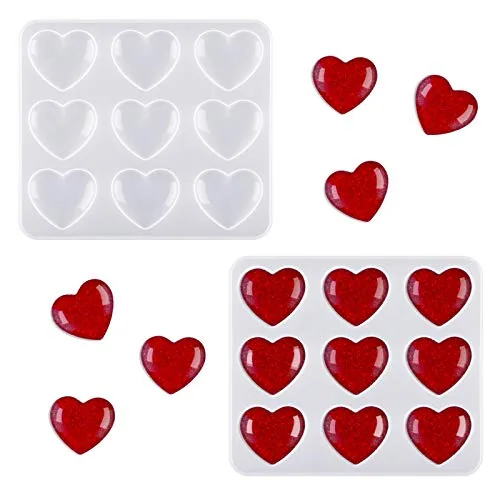
Heart Resin Silicone Mold,1 Piece

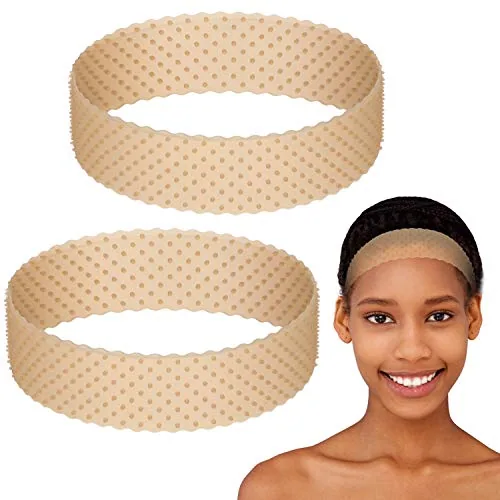
2 Pcs Silicone Wig Grip Band No Slip Elastic,M, Light Brown
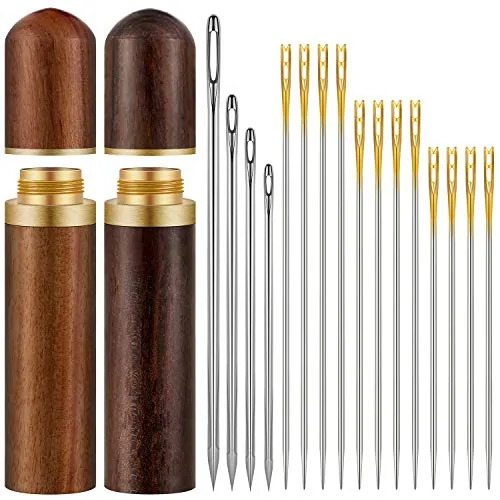
24 Pcs Self Threading Sewing Needles Sets Large Gauge Needle Hand Sewing
What "non-toxic" does and does not say
"Non-toxic" is the most common two words on a craft bag and the least regulated. Nothing in the rules above defines it, and nothing requires a maker to earn it before printing it.
The phrase that does carry weight is the conformance line, because it points at a filed assessment on a five-year cycle. Where an art material is genuinely hazardous, the Act requires cautionary labelling in addition, set out in the same part of the regulations.
So the ranking a buyer can actually use runs like this. A conformance line plus cautionary labelling tells you the most. A conformance line alone tells you an assessment happened. "Non-toxic" on its own tells you the marketing department was involved.
None of that makes an unlabelled bead dangerous. Raw wood, glass, steel and cotton have been safe in craft rooms for a very long time. It means the words on the bag are not the place to find that out.
Checking a recall before you buy
The Commission publishes recalls as they happen, and the search is public. It takes about a minute and it is the single most useful thing a nervous buyer can do.
Search by the product type rather than the brand. Recalls in this trade cluster around categories: magnetic pieces, small balls, coated items and anything battery powered. A category with a run of recalls is worth extra care from every brand in it, ours included.
The Commission also asks buyers to know their seller, and repeats the point every holiday season. It is aimed at counterfeits, and it applies with real force to small parts, where a copy of a pack can be identical on the outside and different inside.
For secondhand craft supplies, which is a genuine market, the recall check is the whole safety story. There is no label to read and no maker to write to.
Reading a pack in thirty seconds
Here is the order we use ourselves when a pack arrives from anywhere, including from us.
- Find the count and the sizes. If a mixed pack gives one number and no split, treat the split as unknown.
- Find the material. "Assorted" is not a material and neither is "premium".
- Look for a choking hazard line and the age on it. Its absence on a craft supply is not proof of anything, but its presence is information.
- Ask whether anything is coated. Coatings are where the tighter paint limit applies.
- Check that the pack closes. A rule about small parts is worth very little if forty of them are loose in a bag.
Thirty seconds, five questions, and most of them answerable from the front of the pack. If two or three cannot be answered at all, that is itself the answer.
At home, at school, on a stall
The same pack asks different questions in different rooms.
| Setting | First question | Second question | What usually goes wrong |
|---|---|---|---|
| A house with a toddler | Does anything fit the cylinder | Where does the pack live between sessions | The pack lives on a low shelf |
| A classroom, ages five to eleven | What age does the warning line name | Is the count enough for the register | One mixed pack split across two tables |
| A market stall | Is the finished item for a child | Does the finished item need its own warning | The supply was checked and the product was not |
| A care home craft afternoon | Is anything sharp or slippery | Can it be done seated with one hand | Pieces too small for stiff fingers |
The third row catches people out. If you buy supplies and sell a finished item, the finished item is your product and the rules attach to it, not to the bag it came out of. That is a different conversation and a bigger one.
The counting side of all this, including how much to add for a classroom register, sits in our counting guide. The packs it talks about live on the WillBond craft and DIY and WillBond sewing and trim shelves.
What we print, and what we refuse to
The WillBond way is to print the count, the sizes, the material and, where small parts are inside, the age line. That is the whole of it.
What you will not see from us is a claim about a standard we have not been told applies to a given pack. There is a strong pull in this trade to put a reassuring word on a bag, and the reassuring word is exactly the thing a buyer cannot check. We would rather print a count you can verify by tipping the bag out.
The WillBond approach is to pass on a maker’s material or conformance line in their own words. Where nothing is stated, we say nothing, which is duller than the alternative and more useful.
The rules above are public and short. If a pack matters enough to worry about, the two CPSC pages linked at the foot of this guide will answer more in ten minutes than any brand's own page, including ours.