Most seasonal decorating is bought twice: once in a hurry, and again next year because nobody could find the first lot. This guide is a plan for the other way round, built around a core set that carries through the year and a short list of things bought fresh.
The cupboard problem
A household buys decorations by occasion. The cupboard fills with four separate holidays that share nothing, and each October the pumpkin box turns out to hold two pumpkins and a great deal of tissue paper.
Buying by material instead of by occasion changes the shape of that cupboard. Wooden beads are not a Christmas item, they are a garland item. Neutral picks are not a wedding item, they are a table item. The same eight materials cover most of the year.
The saving is not only money. It is the twenty minutes in October that you spend looking rather than decorating, which is the part everyone forgets to count.
The buying calendar
Seasonal ranges arrive early and leave abruptly. If you shop when the shops are decorated for a holiday, you are already late for the good colours and early for nothing.
| Season | Buy in | First to go | Safe to leave late |
|---|---|---|---|
| Autumn and Thanksgiving | August | Wooden leaf cutouts, neutral picks | Plain twine and cord |
| Halloween | Early September | Black and orange in the same shade | Cutouts you paint yourself |
| Christmas | September to October | Bead garland, ribbon in a named colour | Unfinished wood ornaments |
| Valentine and spring | January | Red and pink felt | White and cream anything |
| Summer and patriotic | May | Red, white and blue mixed packs | Plain cotton trim |
| Weddings, all year | Ten weeks ahead | One dye lot in quantity | Neutral wood and glass |
The right-hand column is the useful one. Anything unfinished or neutral can be bought at leisure, because it is not part of a seasonal colour run and it will look the same in March as it did in September.
In season
From the holiday shelf
Three seasonal packs, with the count and the size on the front so you can work out how far one goes.

6 Pcs Ceramic Christmas Tree Star Replacement


3 Pcs Pre Cut Gnome Beard Faux Fur Fabric Handmade Small Unfinished

2 Pcs Blue Pink Silicone Betta Fish Bed Leaf Hammock Betta Fish Tank
A core set that works in four seasons
Here is the set the WillBond bench keeps for itself. It is eight items, and between them they cover autumn, winter, spring and a wedding.
- Unfinished wooden beads in two sizes. Garland, napkin rings, ornaments, favours.
- Natural twine and cotton cord. Every garland needs a spine and every tag needs a tie.
- Unfinished wood cutouts. Paint them for the season and they are four different decorations.
- Neutral picks or skewers. Food, cake, centrepiece, flower arrangement.
- Cream or white ribbon by the yard. The one colour that never dates and never clashes.
- Felt in a small neutral range. Backing, padding, and the fastest way to make a shape.
- Artificial greenery, plain rather than themed. A wreath base for anything.
- A pack of small clips or pegs. Photo strings, garland ends, holding glue while it sets.
Notice what is not on that list. Nothing is printed with a holiday, nothing is in a colour that belongs to one month, and nothing has a date on it. The seasonal element is what you add on top, and it is the cheap part.
Autumn: the long run
Autumn is the longest decorating season in the calendar and the most forgiving. It runs from the first cool week to the end of November, the palette is wide, and nothing in it needs to match precisely.
It is also the season where the core set earns its place. Plain wooden cutouts become leaves with one coat of paint. Twine and a bag of beads become a mantel garland in an evening. The one thing worth buying seasonally is a set of leaf shapes, because cutting them yourself is a job for someone with more patience than us.
For a table, count on six to nine pieces of centrepiece per long table and a pick per setting. Buy the picks in bamboo rather than plastic if there is food on them, and buy ten per cent more than the settings, because bamboo snaps.
Winter: the one with the fire risk
Winter decorating is the only part of this calendar with a genuine safety question attached, and the Commission publishes short guidance on it every year.
“Keep balls and toys with small parts away from children younger than three and keep deflated balloons away from children younger than eight”
The same guidance asks decorators to water a live tree, to look for the fire-resistant label on an artificial one, never to leave a candle unattended, and never to string more than three sets of incandescent lights together. Those four lines cover most of what goes wrong in December.
Our own contribution is narrower. Bead garland, wooden ornaments and ribbon carry no electrical or flame risk of their own, which is a good argument for using more of them and fewer of the things that plug in. A wooden garland on a bannister is an evening's work and nothing to switch off.
For a tree, count roughly one and a half metres of garland per foot of tree height, which is more than most people expect. A six foot tree wants nine metres if the garland is going to swag rather than stripe.
Spring and summer: the cheap half of the year
Spring is where the core set does almost everything. Pastel paint on the same cutouts, cream ribbon, and the greenery you bought for a wreath in November. Easter and the spring holidays need almost nothing bought new.
Summer is the outdoor half, and the material question changes. Anything left outside for a season should be wood, metal or plain cotton, because printed paper and thin felt do not survive a week of weather. Colour fades in direct sun regardless of what it is made of, so put the good pieces in shade and the cheap ones in the light.
Patriotic decorating is the one summer exception worth buying fresh. Red, white and blue in a matched set is difficult to assemble from oddments, and the mixed packs are inexpensive.
Year round
The neutral half of the cupboard
Packs that are not tied to a month: plain trim, neutral picks and unfinished shapes you paint for whatever comes next.
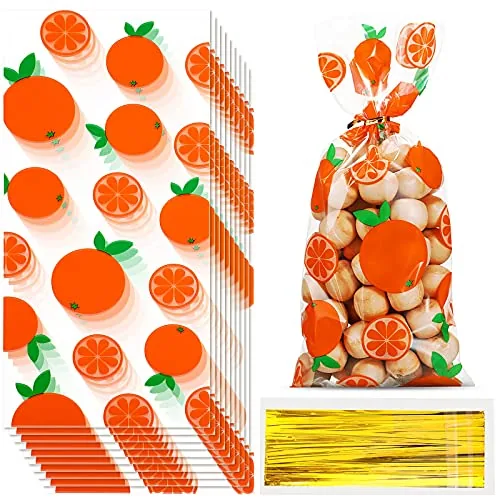
100 Pcs Little Cute Orange Cellophane Treat Bags Candy Plastic Bag
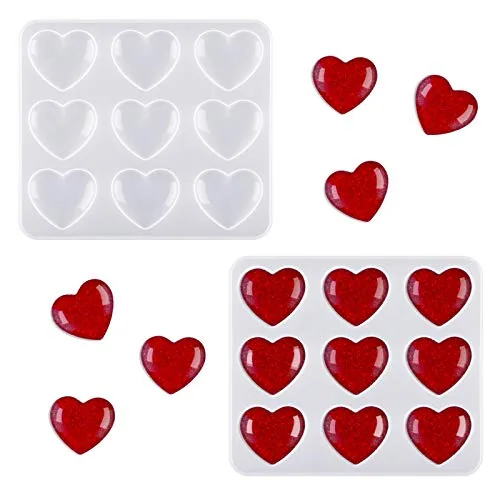
Heart Resin Silicone Mold,1 Piece
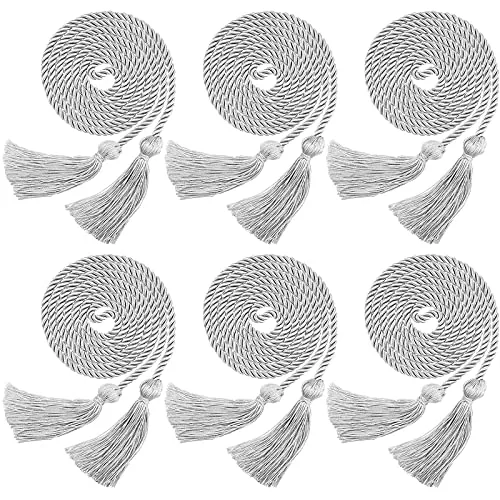
6 Pieces 2026 Graduation Cords Braided Polyester Yarn Honor Cord with
Weddings and the dye lot problem
Weddings sit outside the seasonal calendar and behave differently. The count is known months ahead, the colour has to match across everything, and there is no second chance to buy.
The thing that catches people is the dye lot. Cotton, felt and ribbon are dyed in runs, and two runs of the same named colour will not be identical. Held apart, nobody notices. Laid on the same table, everybody does.
So the rule for a wedding is to buy the whole quantity in one order, add the margin at the time, and resist the urge to order more later. If you do run short, it is usually better to change the accent entirely on one element than to add a near-match to the rest.
Neutral materials dodge the problem completely. Raw wood, glass and unbleached cotton have no dye lot to drift. That is why so much of the core set is undyed.
Ten weeks ahead is the buying window we suggest. It leaves time to build one setting, photograph it, look at it for a week, and change your mind once, which everyone does.
What survives outside, and for how long
Anything that goes on a door, a porch or a fence is in weather, and materials sort themselves quickly.
| Material | A wet week | A season | A year |
|---|---|---|---|
| Unfinished wood | Fine | Greys and lifts a little | Cracks at the grain |
| Painted wood | Fine | Fine in shade, fades in sun | Chips at the edges |
| Metal clips and wire | Fine | Fine | Rust at cut ends unless coated |
| Cotton trim and twine | Sags when wet | Fades and weakens | Gone |
| Felt and paper | Curls, then pulps | Gone | Gone |
| Artificial greenery | Fine | Fine | Fades on the sun side only |
Read the greenery row and the wood row together and you have the recipe for a door wreath that lasts. Plain greenery on a wire base, wooden pieces wired rather than glued, and no paper anywhere near it.
The last column is the one to plan for. A wreath rebuilt each year from a base that lasts is cheaper and better than a whole wreath bought each year, and it is the same principle as the core set indoors.
Storing it so next year is easy
Storage is the part that decides whether any of this works. Three rules cover it.
- Store by material, not by holiday. One box of wood, one of textile, one of greenery. The holiday box is the reason you buy pumpkins twice.
- Keep the original bag and its label. The count and the size are printed on it, and next autumn you will want both.
- Wind garland on a card rather than coiling it. A coiled garland becomes a knot in nine months without fail.
Add one photograph. Take a picture of the finished mantel or table before it comes down, and put it in the box. It answers next year's real question, which is not what you own but how it looked.
Decorating with children in the room
Half the appeal of a paper chain is that a five year old can make it. The other half of that sentence is the part worth planning for.
Anything small enough to swallow is a question below the age of three, and the test for that is physical rather than a matter of judgement. Deflated balloons stay a question for considerably longer, up to eight, which surprises most people the first time they read it.
The practical answer is not to ban the small things, it is to separate the tables. Beads and gems on a high table for older children and adults, paper and felt on the low one, and the bags closed and away the moment a session ends. Loose small parts on a floor are the failure mode, not the craft itself.
Glue is the other thing to plan around. Hot glue and a child of six do not belong at the same table, and almost every decoration in this guide can be tied, wired or stitched instead. Twine is slower and it is also the version everyone can join in with.
We wrote the whole of the labelling side up separately, including what the age lines mean and where the numbers come from.
What a reused set actually saves
Here is the arithmetic for one household over a year, using the core set above against buying each occasion separately.
| Occasion | Bought as a themed set | Using the core set | Bought fresh |
|---|---|---|---|
| Autumn mantel | A full themed kit | Beads, twine, cutouts | Leaf shapes only |
| Christmas tree and bannister | A full themed kit | Beads, ribbon, cutouts | One named colour |
| Spring table | A full themed kit | Ribbon, greenery, picks | Pastel paint |
| Summer party | A full themed kit | Picks, clips, cord | One mixed pack |
Four themed kits against one core set and four small top-ups. The core set costs more in the first year and less in every year after, which is the ordinary shape of buying well.
There is a fair objection to all of this. A house that decorates once a year, for one holiday, does not need a core set at all, and a themed kit bought in September is the right answer. The plan above is for people who decorate three or four times a year and are tired of the cupboard.
If you are working out how many of anything to buy, our counting guide has the margins we use by material, and the small parts guide covers the age lines on packs that go near children. The seasonal pieces themselves are on the WillBond holiday and seasonal shelf.